2011年4月6日 星期三

單級功率放大器(3)6CM4=EC86


這兩天 :


清明時節雨紛紛,輻射烏雲飄過來,不過氣象局。原能會都說」安了」。


真空管功率放大器,傳統的作法是第一級電壓高倍數放大,第二級電流放大,經由輸出變壓器匹配8 歐姆阻抗的喇叭取得功率。


如果要把這兩級壓縮在一起,一次完成,也未嘗不可。


Colin單端、一級放大5687就是這樣的架構。


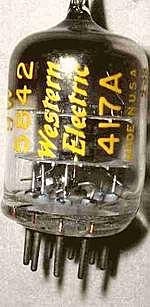
我DIY的5842=417A也是相同架構,用在電腦小喇叭以及耳機,相當滿意。


共通的優點是失真最低,聲音清純透徹,弱點是需要高電平的輸入訊源,功率小,動態不足,說不好聽是」氣若游絲」。


現在我設定目標:


訊源輸入一般CD的 1 V-rms,輸出變壓器次級電壓 3 V-rms,整體電壓放大3倍,8歐姆喇叭取得 3*3/8=> 1 W功率輸出,,希望有所改善,但是不知道可行性如何?


下面紙上作業看看。


前篇E88CC=6DJ8管算過,可行。


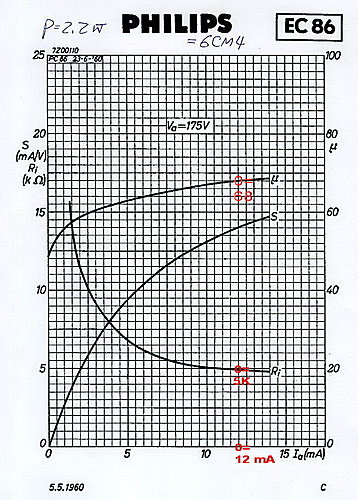
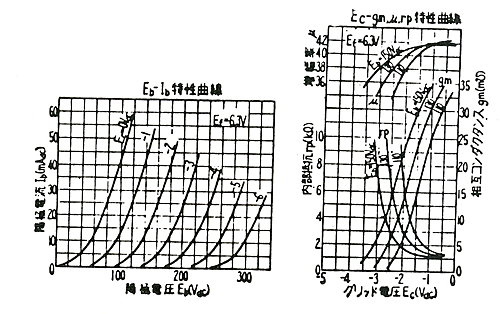
改試Philips EC86= 6CM4特性:


工作在 Plate volts屏壓175 V, Grid volts柵極偏壓 -1.5 V時,她的plate resistance屏阻Rp是 5 K ,Amplification factor放大因數 u 是 68,如紅色圈註。


1.        輸出變壓器阻抗維持 1.5*Rp時,放大倍數就可以有68*1.5/(1+1.5)= 40.8倍。


2.        要維持整體電壓放大3倍的話,輸出變壓器圈數比要N=40.8/3= 13.6


3.        輸出變壓器圈數比N=13.6表示初級阻抗要13.6*13.6*8= 1480 = ~1.5k


4.        初級阻抗1.5k,表示管子的輸出阻抗要 1.5k/1.5 = 1k.


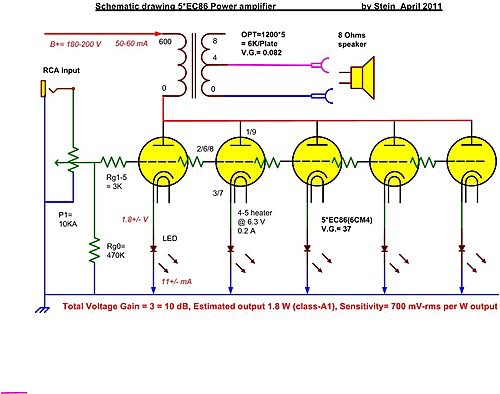
5.        輸出阻抗要降低到1k需要並連 EC86 一共 5k/1k= 5屏,即是5支管子。


6.        Miller capacitance米勒電容Cg-p= 2ppf,假定入前級的輸出阻抗=2.5k,相當於 volume potentiometer= 10k, 因此 1/(2ppf * 5*69*2500R*2-pie) = 92k Hz@-3dB 還好。


7.        Output transformer 1500R/8R, 5*12 mA=60 mA


結輪:可行。


DIY實作嗎?


我還沒有碰過EC86, 6CM4管


A.E.S網站 6CM4/EC86 – Triode   定價 USD 6.60  可是說斷貨了Out of Stock。


我還有一對 OPT-ONE ELECTRON 1600R/8R 160 mA 會是牛刀殺小雞


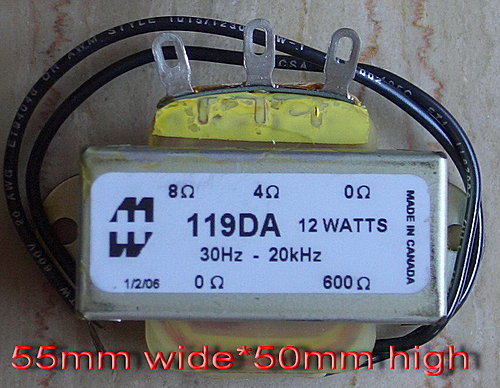
另一對HM 600R/4R= 1200R/8R 小一點的或許可用。


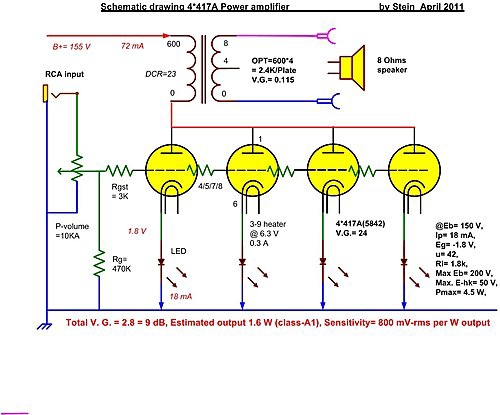
工作點自立偏壓可用 LED 約在 -1.8V上下,降低屏流 11mA, 省下陰極電阻/電容,再將屏壓提高到上限200 V,這樣輸入電平允許高一點,還在Class-A1, 輸出功率相對高一點。


2011年4月4日 星期一

單級功率放大器(4)417A-5842


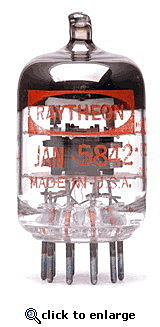
用 417A比EC86少一支,只要4支,比較合理,但要犧牲一點靈敏度。
強點是高頻好,因為Miller 電容影響小。
1/1.5ppf*4*43*2500*6.3=246 kHz @-3dB


不怕麻煩的話,LED改用陰極電阻電容,提高工作點 180V/-2.5V/20mA可望允許高的輸入,有高的輸出,但是靈敏度還是一樣的。

2011年4月3日 星期日

單級功率放大器(2)6DJ8


這兩天 :


清明時節雨紛紛,輻射烏雲飄過來,不過氣象局說」安了」。


真空管功率放大器,傳統的作法是第一級電壓高倍數放大,第二級電流放大,經由輸出變壓器匹配8 歐姆阻抗的喇叭取得功率。


如果要把這兩級壓縮在一起,一次完成,也未嘗不可。


Colin單端、一級放大5687就是這樣的架構。


我DIY的5842=417A也是相同架構,用在電腦小喇叭以及耳機,相當滿意。


共通的優點是失真最低,聲音清純透徹,弱點是需要高電平的輸入訊源,功率小,動態不足,說不好聽是」氣若游絲」。


現在我設定目標:


訊源輸入一般CD的 1 V-rms,輸出變壓器次級電壓 3 V-rms,整體電壓放大3倍,8歐姆喇叭取得 3*3/8=> 1 W功率輸出,,希望有所改善,但是不知道可行性如何?


先在紙上作業看看。


前篇TungSol的12AX7管算過,不通。


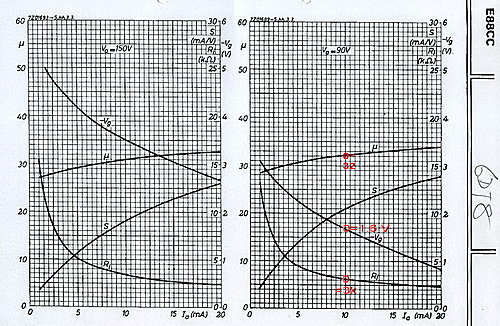
改試E88CC=6DJ8 特性:


工作在 Plate volts屏壓90 V, Grid volts柵極偏壓 -1.6 V時,她的plate resistance屏阻Rp是 3 K ,Amplification factor放大因數 u 是 32,如紅色圈註。


1.        輸出變壓器阻抗維持 1.5*Rp時,放大倍數就可以有32*1.5/(1+1.5)= 19.2倍。


2.        要維持整體電壓放大3倍的話,輸出變壓器圈數比要N=19.2/3=6.4


3.        輸出變壓器圈數比N=6.4表示初級阻抗要6.4*6.4*8= 328 = 0.33k


4.        初級阻抗0.33k,表示管子的輸出阻抗要 0.33k/1.5 = 0.22k.


5.        輸出阻抗要降低到0.22k需要並連 6DJ8 一共 3k/0.22k= 13.6=14屏,即是7支管子。


6.        Miller capacitance米勒電容Cg-p=1.4ppf,假定入前級的輸出阻抗=2.5k,相當於 volume potentiometer= 10k, 因此 1/(1.4ppf * 14*33*2500R*2-pie) = 98k Hz@-3dB 還好。


7.       Output transformer 10*14=140 mA,  220R/8R


結輪:可行。


單級功率放大器(1)-12AX7


這兩天 :


清明時節雨紛紛,輻射烏雲飄過來,不過氣象局說」安了」。


真空管功率放大器,傳統的作法是第一級電壓高倍數放大,第二級電流放大,經由輸出變壓器匹配8 歐姆阻抗的喇叭取得功率。


如果要把這兩級壓縮在一起,一次完成,也未嘗不可。


Colin單端、一級放大5687就是這樣的架構。


我DIY的5842=417A也是相同架構,用在電腦小喇叭以及耳機,相當滿意。


共通的優點是失真最低,聲音清純透徹,弱點是需要高電平的輸入訊源,功率小,動態不足,說不好聽是」氣若游絲」。


現在我設定目標:


訊源輸入一般CD的 1 V-rms,輸出變壓器次級電壓 3 V-rms,整體電壓放大3倍,8歐姆喇叭取得 3*3/8=> 1 W功率輸出,,希望有所改善,但是不知道可行性如何?


先在紙上作業看看。


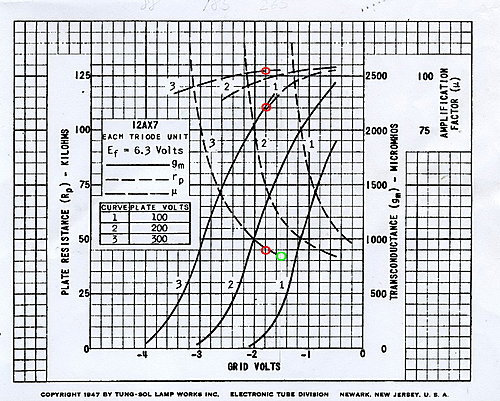
按照TungSol的12AX7管 特性:


工作在 Plate volts屏壓300 V, Grid volts柵極偏壓 -1.8 V時,她的plate resistance屏阻Rp是 45 K ,Amplification factor放大因數 u 是 大於100,如紅色圈註。


1.        輸出變壓器阻抗維持 1.5*Rp時,放大倍數就可以有100*1.5/(1+1.5) = 60倍。


2.        要維持整體電壓放大3倍的話,輸出變壓器圈數比要N=60/3=20


3.        輸出變壓器圈數比N=20表示初級阻抗要20*20*8= 3200 =3.2k


4.        初級阻抗3.2k,表示管子的輸出阻抗要 3200/1.5= 2133 = 2.1k.


5.        輸出阻抗要降低到2.1k需要並連 12AX7 一共 45k/2.1k= 21.4=22屏,即是11支管子。


6.        Miller capacitance米勒電容Cg-p=1.7ppf,假定入前級的輸出阻抗=2.5k,相當於 volume potentiometer= 10k, 因此 1/(1.7ppf * 22*100*2500R*2-pie) =17 Hz@-3dB不及格。


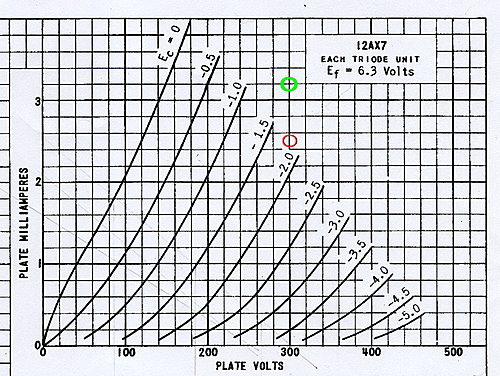
7,       如綠色圈註,提高屏流到 3.2 mA,降低偏壓到 -1.5 V,屏熱耗=3.2*300=0.96 W, j近於極限 1W,但是Rp=42k 減低有限。


結輪:卡在第6點,高頻衰減太多,不可行。


2011年3月27日 星期日

直交417A併聯4屏-之2-新瓶新酒先打洞


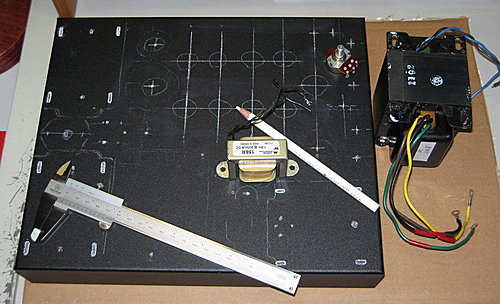
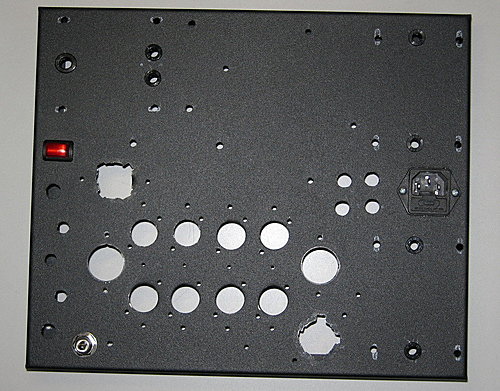
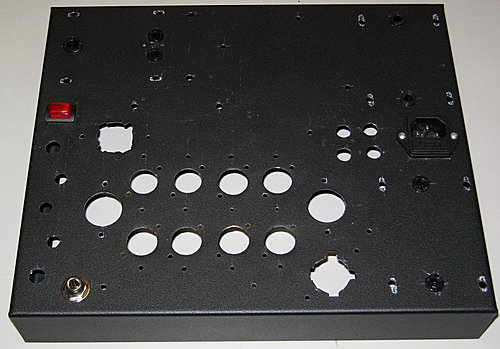
黑烤漆的新機 殼Hammond 12"*10"*2"結實牢靠、算是容易加工的。
比"發不久機」12"*8"寬裕多了。
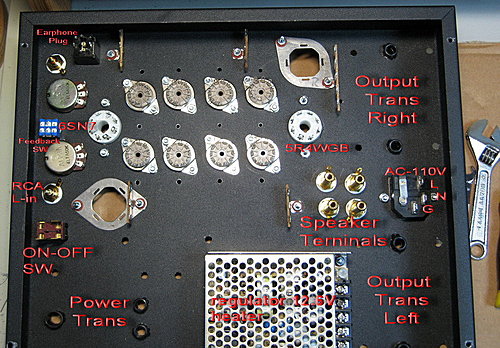
有耳機 插 孔,需要把 output transformer 跟 power transformer拉開, output trans在右邊上、下,power trans在右下角。
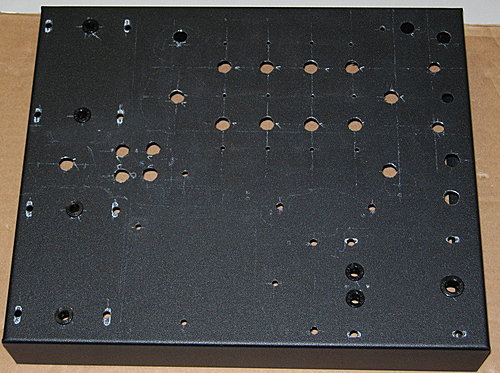
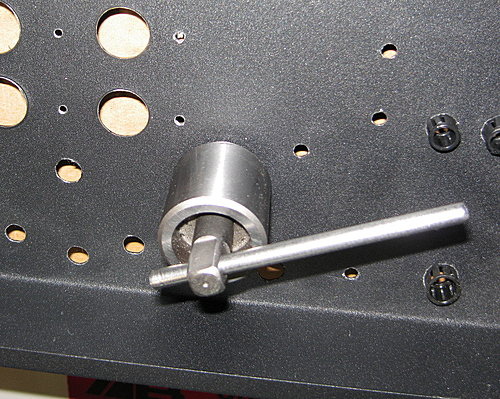
所有留孔全在頂上,不擺側邊,不佔地板面積,容易鑽孔。
另件實體比畫,做記號。


鑽出  2 mm導引孔之後,再鑽 9 mm  孔


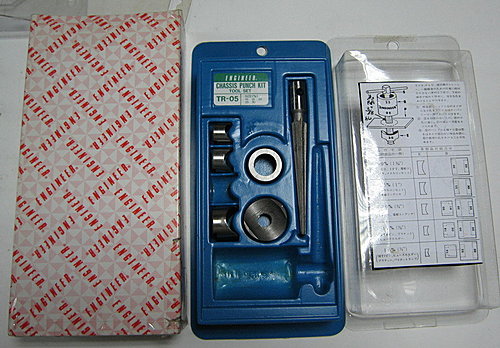
chassis punch 打孔工具10年前 後車站五金行好不容易才挖到這一副庫存。


馬鞍型刀刃已經快要沉到底了。


這一頭頂著。板手硬轉把另一頭刀刃收進來。
大於 30 mm孔徑,刀刃那頭最好兩個頂尖先鑽個 2 mm引孔。


毛頭要修 。 鋁罐電容的孔 可以nibbling  tool 車掌用的票剪 」咬」出來。


transformer引線孔 12 mm 要拿絞刀 絞出來。
方形的開關座、插座需要耐心用平銼刀 磨出來


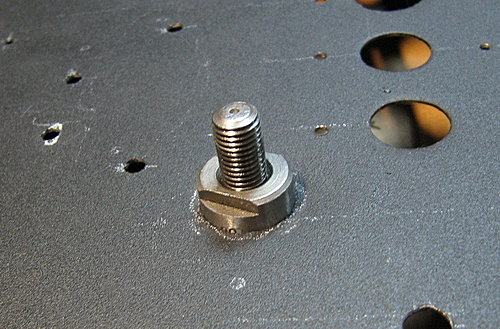
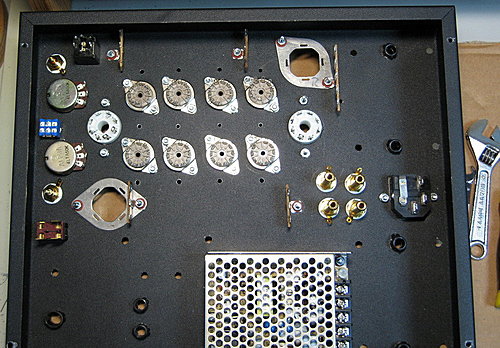
鎖上接線棚架


2011年3月18日 星期五

竹山蕃薯


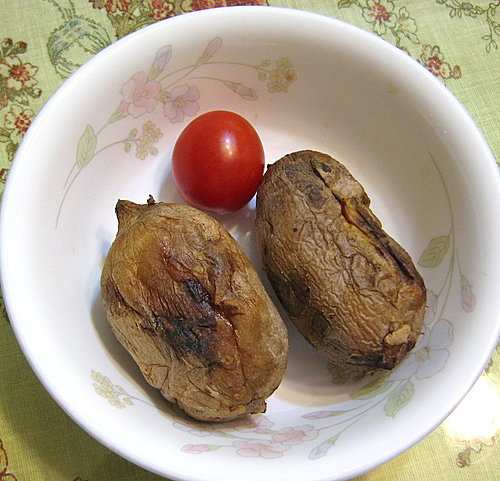
先用電鍋蒸3次,再用烤麵包機烤3次。


市面上沒有 專用的 "烤蕃薯機"。


北港出土豆,竹山出蕃薯

竹山蕃薯黃皮的最好吃。

台灣蕃薯比之於日本德島蕃薯便宜太多了。
"全家"便利商店,現烤的一大條只要 15到20元。
特點是:


  1. 土頭土腦,賣相不良
  2. 含水份多、鬆鬆軟軟的
  3. 烤焦之後,甜如糖蜜
  4. 切塊煮稀飯最好。
當做烤蕃薯點心的話,需要注意:


  1. 不要買到"過期的"   "臭香"  "長有鬍鬚的"
  2. 外皮要用力刷洗乾淨
  3. 蒸煮要透,時間久一點,30分鐘是絕對不夠的。最好 3*20分鐘。
  4. 還要一道加工手續"放到烤箱",儘量烤到"皮焦肉Q"、"皮起皺紋」。
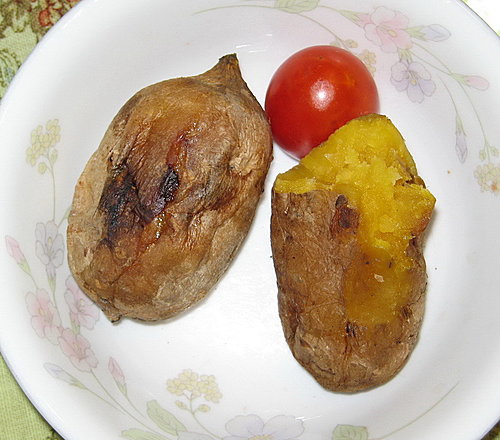
  5. 要是能烤到糖蜜滲出 來,那"德島蕃薯"就甘拜下風了。


已經在烤箱加工過,還是一肚子水


左邊那條有糖蜜了


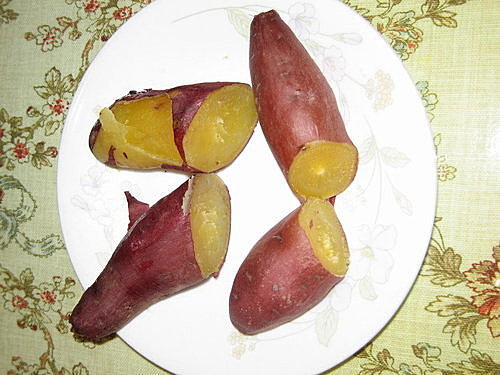
紅皮的是德島蕃薯,吃起來有 栗子 的味道。這是 台灣蕃薯 趕不上的。


2011年2月26日 星期六

混淆視聽228


平衡報導一下


The KMT's original sin


Feb 22nd 2011, 11:49 by Banyan


FOR a foreigner, it is a moving exhibition about a little-known and terrible episode in Taiwan』s history. The 「228 memorial museum」, reopened on February 20th by President Ma Ying-jeou in a 「peace park」 within view of his presidential palace, is sombre but informative. 


There are mugshots of the victims of a massacre; long lists of their names; painful eyewitness testimony; contemporary photographs and clothes; a painting of blindfolded, bound men being executed. The slaughter was, according to one exhibit, 「a Formosan holocaust that left an indelible scar」. 


The museum recalls the carnage on the island in 1947. After half a century as a Japanese colony, Taiwan had been handed back to China at the end of the second world war. Its inhabitants found the incoming Chinese administration, under the governor, Chen Yi, even more corrupt and cruel than the Japanese. A classic 1965 book, "Formosa Betrayed" in which George Kerr, an American diplomat and eyewitness, recalled the massacre is now available in full online.

On February 27th 1947 a woman selling contraband cigarettes was brutally attacked by agents from the Alcohol and Tobacco Monopoly Bureau. The next day, protests against her treatment spread into an island-wide insurrection, which succeeded in gaining administrative control of parts of it. It was suppressed by Chinese troops at a cost in human lives that is still disputed—but in the tens of thousands (10,000-30,000). One exhibit describes the behaviour of soldiers and police as 「illegal, disorderly and outrageous」.


Martial law was declared by the authorities from the then-ruling Nationalist party or Kuomintang (KMT). Reimposed in 1949, it was not to be lifted until 1987, maintained, in theory, to defend Taiwan against the threat of invasion by the Communists on the mainland.


「228」 became unmentionable. After all, the KMT remained in power, and Taiwan's politics were dominated by the mainland-China born elite who had fled the Communist victory at the end of the Chinese civil war in the late 1940s. Many of the Taiwan-born majority felt oppressed. Their own post-war struggle for liberation from the dictatorship that Chiang Kai-shek brought to the island was belittled and ignored. 


As Taiwan embraced democracy in the late 1980s and 90s, the past was disinterred. In 1995, Taiwan's president at the time, Lee Teng-hui of the KMT—a Taiwanese rather than a mainlander—apologised for the atrocity, and the memorial museum was opened in 1997. Then, from 2000-08, Taiwan had a president from the Democratic Progressive Party (DPP), which draws on Taiwanese-nationalist sentiment. The DPP have always denied that Taiwan is part of China, arguing that it is, and should be, independent. The 228 massacre was central to their argument that Taiwan is a separate country, and that the idea of unification with China had been imposed, viciously, by Chinese troops.


So when the KMT ousted the DPP in the 2008 presidential elections and later closed the memorial museum 「for renovation」, it was easy to assume that it would never reopen. But now it has. The DPP are predictably scathing about the changes the government has made, arguing that the exhibition sanitises the past, minimises the KMT』s guilt, and portrays a righteous popular uprising as mob violence.


I never saw the earlier exhibition, but it is hard to see this one as a whitewash. Rather, it seems a rare and commendable example of a country confronting the most painful episode in its past and admitting the scars it has left. For anyone who has spent time on the mainland, the contrast is stark.


Perhaps just as impressive was the treatment of a lone protester outside the museum when I visited. A young official from the city government suggested he take his protest elsewhere. Patiently and courteously, she reasoned with him longer than I had the patience or courtesy to wait.